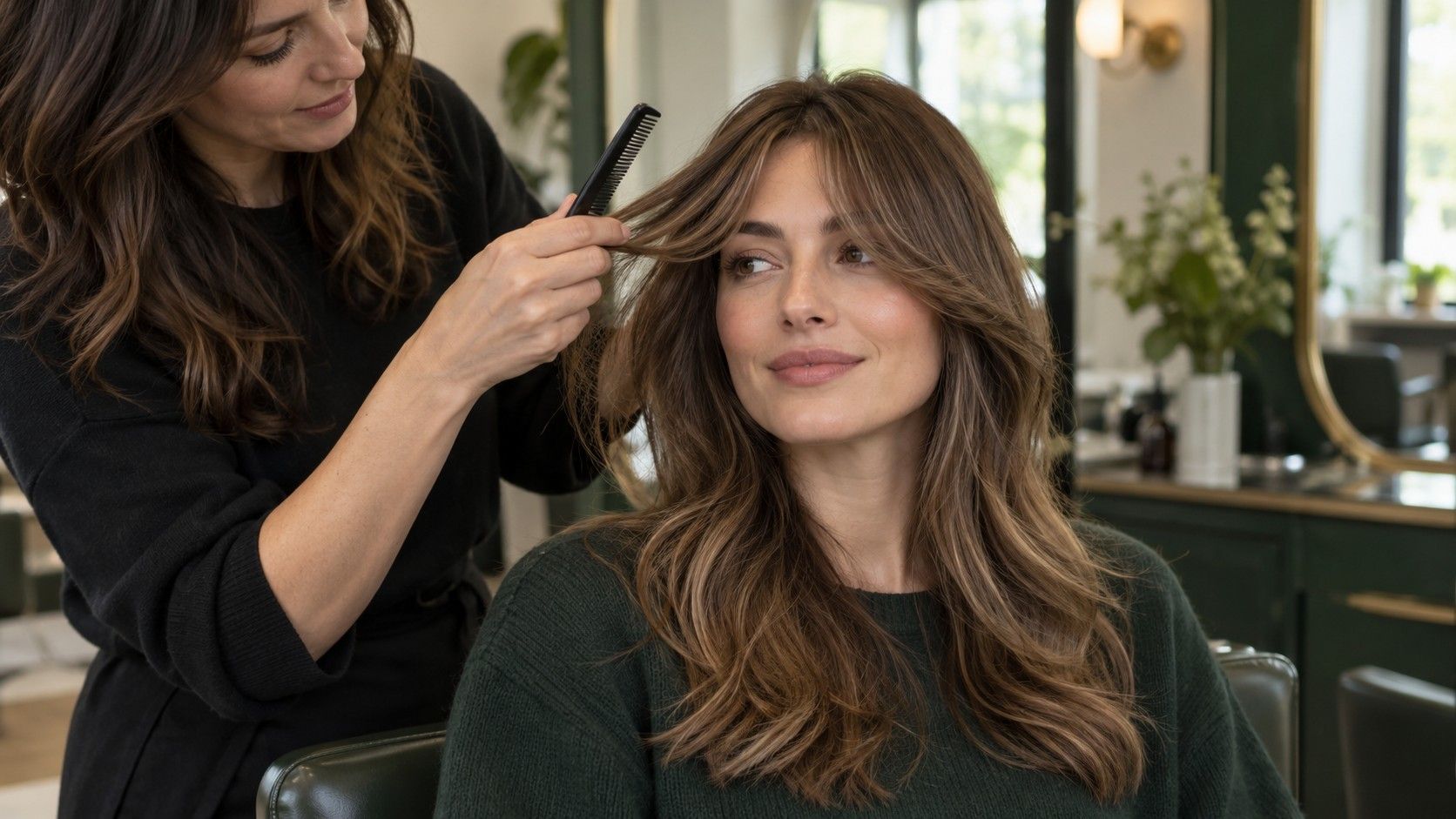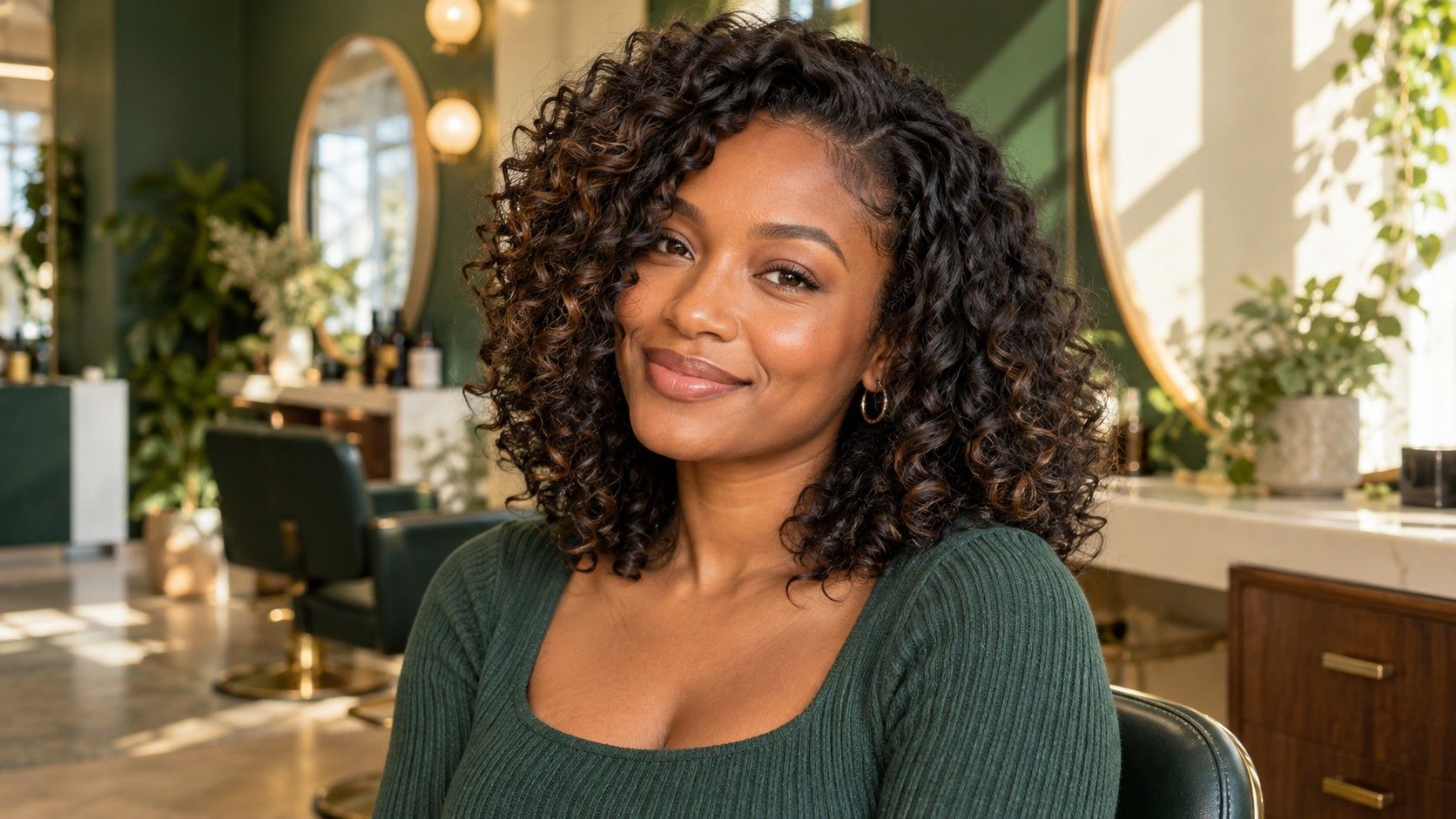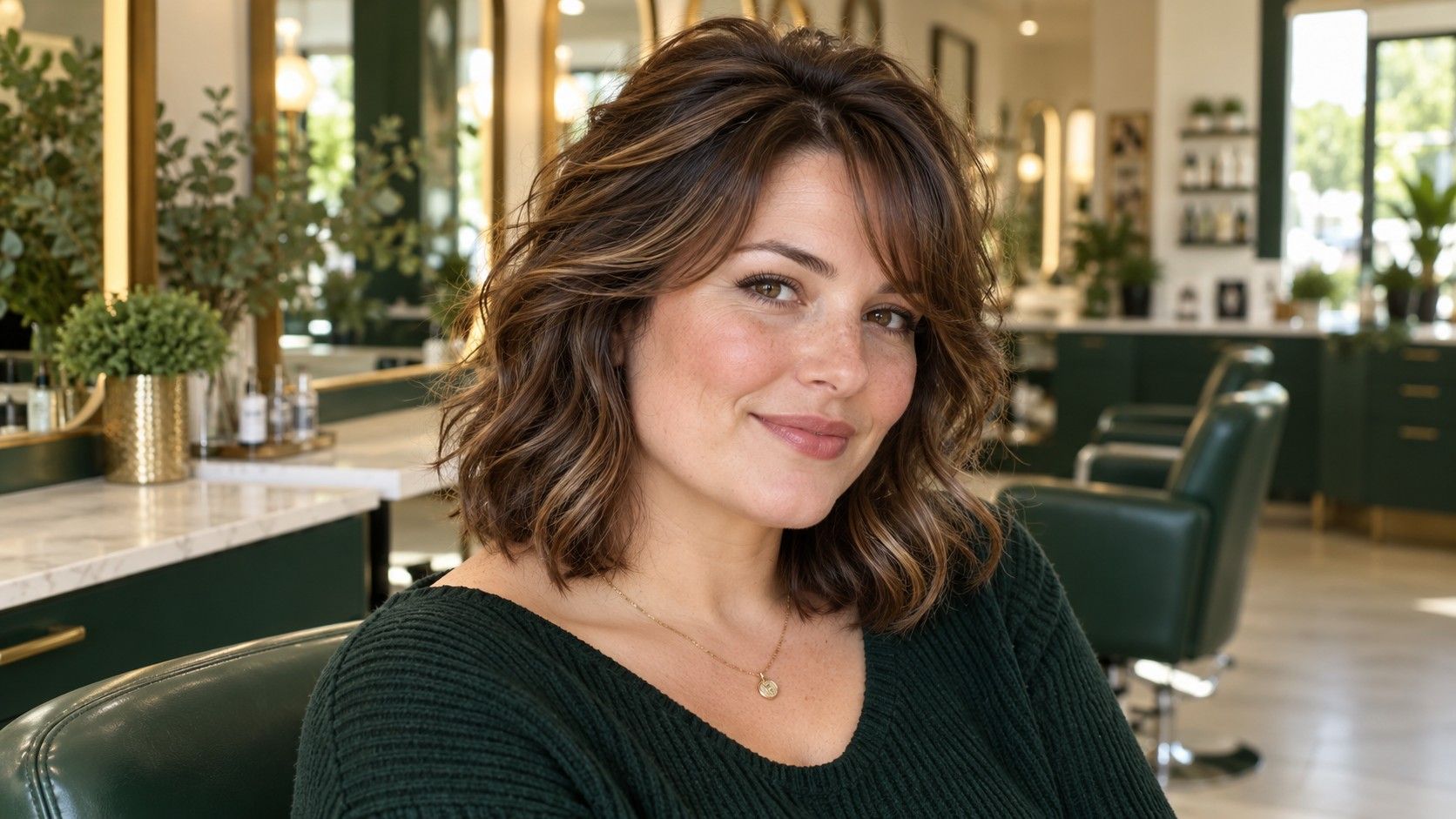
A triangle face is often described as narrower at the forehead and broader around the jaw. That can be a useful starting point when choosing a haircut, provided it does not turn into a list of things to hide. I look at hairstyles for triangle faces through a more practical question: where do you want the hair to sit, and which parts of the outline do you enjoy showing? Crown shape, fringe and the placement of the ends offer several ways to answer it.
Make sure the reference describes your face
The word triangle causes confusion because some hairstyle charts use it for a broad jaw, while others mean an inverted triangle with a broader forehead. Pull your hair back loosely and compare the upper and lower outline in an eye-level mirror. In this article, triangle means that the jaw appears broader than the forehead. If your forehead is widest and your chin tapers, references labeled heart or inverted triangle may describe the outline more closely.
You do not need to fit the category perfectly. A softly rounded jaw and a narrower temple area can create the same practical haircut questions as a more angular outline. Look at your hairline and the space beside the temples, then look at how the hair falls around your jaw. A middle part, a side part and a tucked section can change that frame without changing the haircut itself.
Use a photograph taken from a reasonable distance as another view, rather than treating a close selfie as a measurement. Keep the camera level and relax your chin. The useful outcome is a sentence such as “I want more movement around the top and fewer ends resting on my jaw.” You might prefer the opposite and want a blunt edge that emphasizes the jaw. That is a valid design choice too.
Decide whether you actually want more crown volume
Advice about haircuts for triangle faces often jumps directly to adding height. Before asking for layers, lift the hair at your crown with your fingers and check the effect. Does it create the outline you wanted, or does it simply make the whole style feel taller? Someone with a long face may prefer a little width around the temples to extra height at the very top. These are different requests and need different placement.
Shorter crown layers can make movement easier, but they do not guarantee lasting volume. Fine hair may lie flat again once the styling disappears. Dense hair may lift more than expected, and a crown cowlick may send a short piece in an awkward direction. Ask the stylist to look at the crown dry and discuss what your hair does after sleep or under a hat. Those details are more useful than a promise of effortless lift.
A longer top on a short cut gives you room to sweep the hair sideways or forward. On shoulder-length hair, a small change to the parting or drying direction may provide enough movement without cutting a pronounced layered crown. I would try the smallest change first if you are uncertain. If you love a high, sculpted top, say so clearly; it is a style preference, not an obligation attached to the face shape.
Choose where the lower edge will land
A blunt bob that finishes beside the jaw creates a visible horizontal line in that area. Some people love its crispness. If you prefer a quieter edge, compare a slightly longer bob whose corners sit below the jaw, or a softer outline with movement at the ends. Folding your hair under can help you compare positions. Check both sides and the profile, because the front corners may appear shorter when you turn.
A long cut offers room for face-framing pieces below the cheekbones, but too many layers near the perimeter can make the lengths look thin. On fine hair, discuss whether the lower edge should remain mostly solid. On dense hair, ask where weight can be removed without creating unwanted puffiness beside the jaw. “Lighter” can mean a softer edge, less internal weight or shorter layers; show which result you mean.
Shoulder length deserves a collar test. Ends can catch on a jacket and turn outward, creating a wider shape than the reference photo suggests. If that would bother you, bring the collar into the consultation or describe the clothes you wear most often. Keeping the cut a little above or below that contact point may help, although natural bends and your drying routine still influence where the ends settle.
| Choice | Effect to compare | Daily consideration |
|---|---|---|
| Blunt jaw-length bob | A defined line beside the jaw | How the corners turn after drying |
| Longer bob | Ends sitting below the jaw | Contact with shoulders and collars |
| Layered medium cut | Movement above and beside the face | Short pieces when tied back |
| Short cut with a longer top | More control around crown and temples | Growth around ears and nape |
Use fringe to frame the forehead comfortably
Fringe can bring texture across the forehead and beside the temples. A side-swept fringe leaves a diagonal opening; a light curtain fringe creates a central opening; a fuller fringe covers more of the forehead. Compare those openings before choosing a name. With a narrower forehead, a very deep fringe section may use more of the front hair than you expected. Ask the stylist to show the proposed section before it is cut.
Hold a few pieces across the forehead and look with your glasses on, if you wear them. Check whether the ends touch the lenses or sit on the frames. The corners matter: fringe that looks short in the middle can still be irritating at the sides. If your hairline has a strong growth direction, a sweeping shape may settle more easily than a perfectly even fringe, but the stylist needs to inspect your particular hair.
Long curtain pieces are sometimes presented as a low-commitment option. They can still need drying and adjustment, especially when the parting opens unevenly or the ends fall into your eyes. Ask how the shortest piece will behave without a round brush. If you usually wash at night and leave the house quickly in the morning, a longer face frame that tucks behind the ear may suit your routine better.
Let waves, curls and density shape the plan
With waves, the same layer can sit at the cheekbone one day and closer to the mouth another. Show the stylist how the hair looks after your usual drying method. A reference that has been curled with a tool may suggest a layer pattern your natural wave will not reproduce. Ask where the first front layer is likely to rest when dry and whether it will still tuck away.
Curly hair can carry a broad, rounded outline or a longer, narrower one, depending on curl pattern, density and shaping. You do not need to reduce volume beside the jaw simply because a chart recommends it. Decide whether that volume is part of the look you enjoy. If you want to shift it, discuss the overall dry silhouette and shrinkage rather than asking for the sides to be thinned indiscriminately.
Fine straight hair often benefits from careful restraint. Removing too much hair around the face can make the front appear disconnected from the lengths, while short layers may still need styling to show movement. A mostly solid cut with a modest front frame can be a useful starting point. Dense straight hair presents another problem: a short edge may swing out or bunch near the jaw. A stylist can assess weight distribution, but no face-shape rule replaces that examination.
Test the practical version before agreeing to the cut
Bring references that show the front, side and back if you can. Point to the particular detail you want: a soft temple area, an exposed jaw, a longer fringe or a compact nape. Choose photographs with hair density and texture close to yours. A beautiful blowout can conceal how much work the haircut needs, so ask what the same shape might look like with your ordinary routine.
Check the tied-back version during the consultation. If you need a ponytail for work or exercise, agree which front sections must reach it. A flattering loose layer is less useful if you spend every morning clipping it out of the way. For a short cut, ask how the ear area will grow and which part is likely to lose its shape first. Discuss maintenance based on that cut rather than assuming all short styles are equally easy.
At the end, ask to see the simplest finish you could repeat at home. Notice the direction of the dryer and whether product is concentrated at the roots or the ends. A triangle outline leaves room for sleek edges, airy layers, curls and crops. The best plan is the one that matches the silhouette you chose and the time you are willing to spend keeping it there.