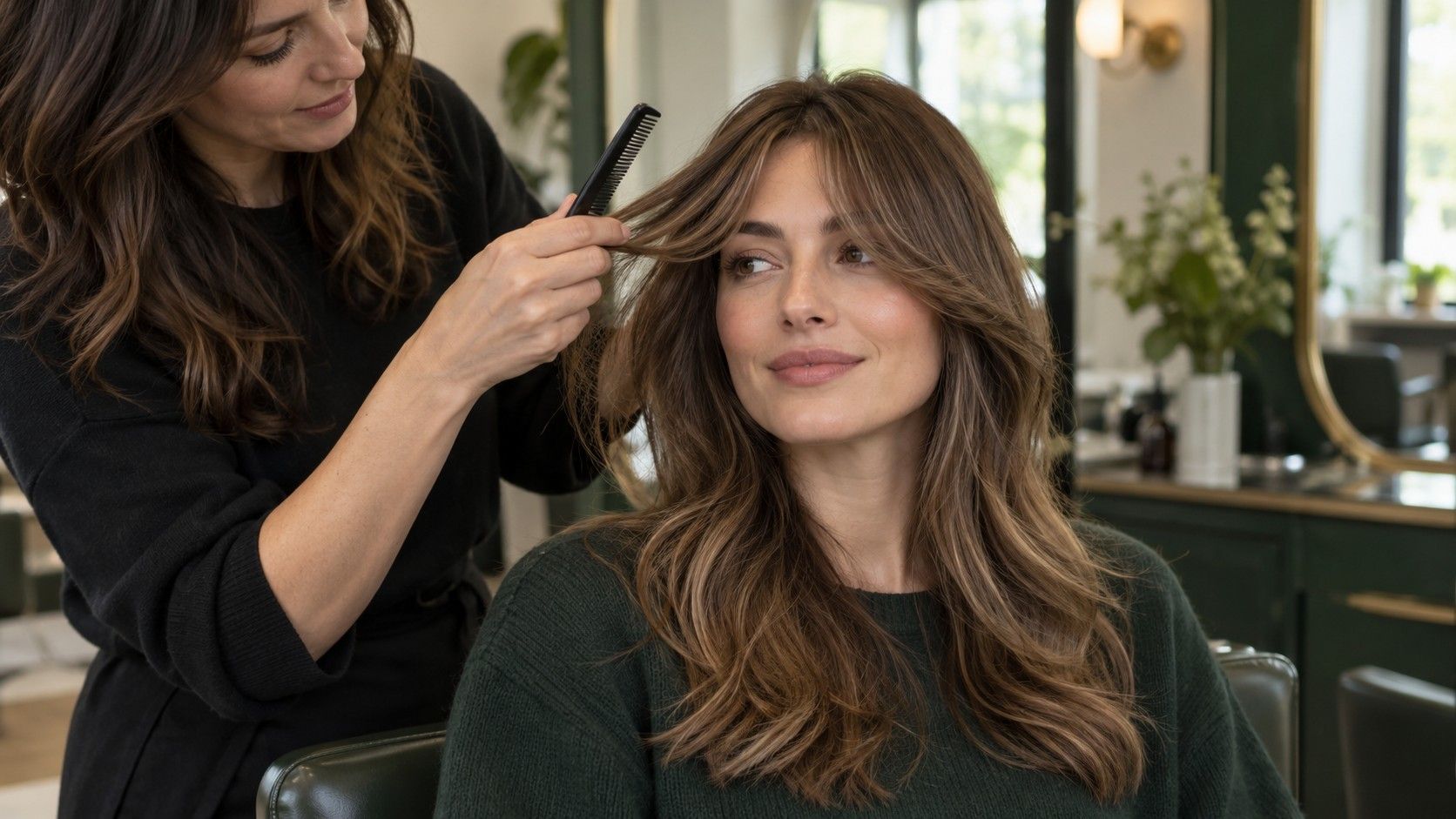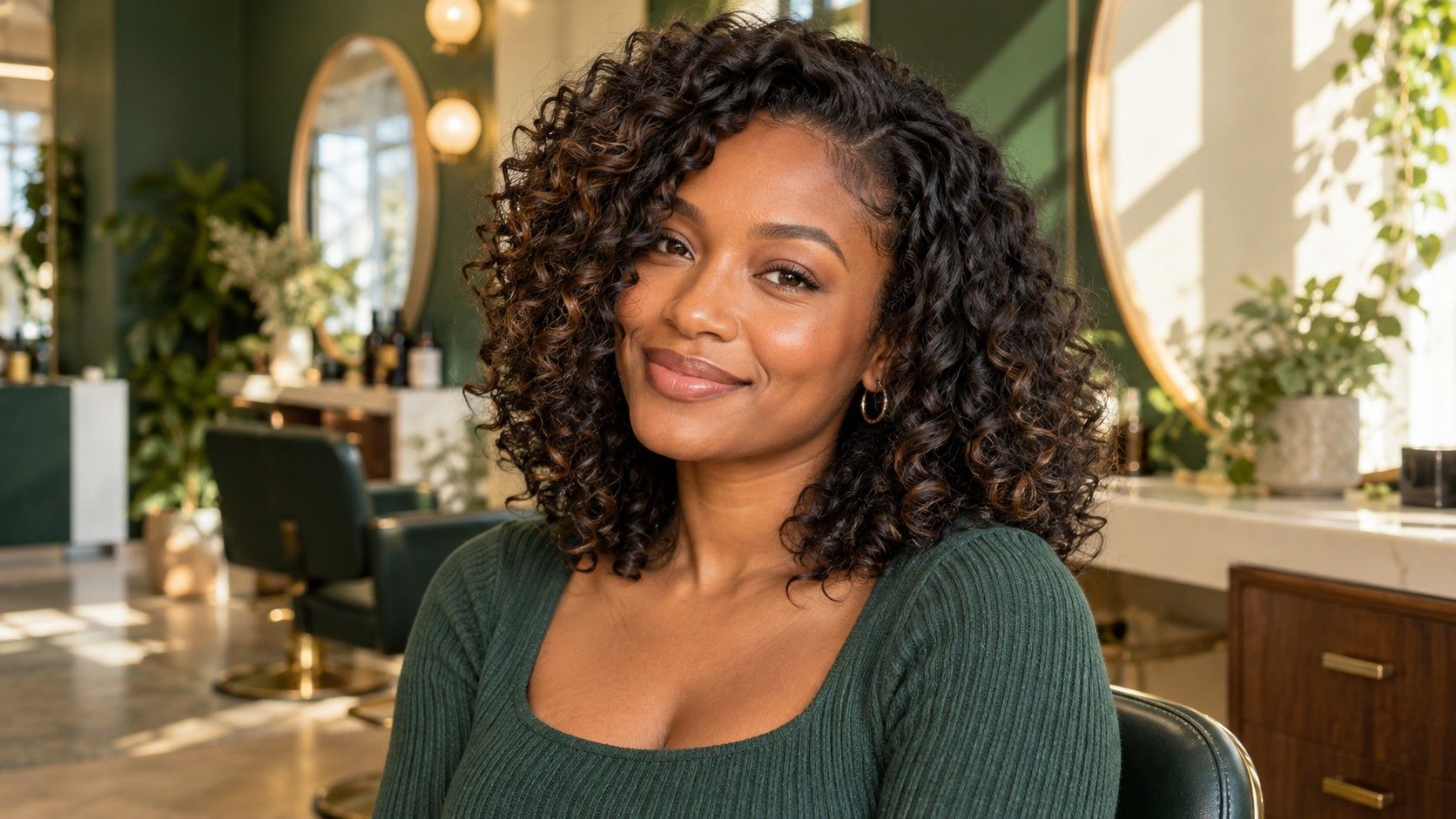
The most useful question about bob length for your face shape is where you want the edge to land when the hair is dry. A few centimeters can move it from the cheek to the jaw, or from a clean line above the shoulders to an edge that catches on a collar. I would choose that resting point before debating a bob's name. Your texture, neck, glasses and tie-back needs will tell you more than a chart assigning one haircut to every face.
Start with the jobs your bob needs to do
Before collecting photographs, decide whether you need to tuck both sides behind your ears or gather the hair for exercise. These requirements can determine the minimum front length. Hair that reaches the jaw may tuck on one person and spring away from the ear on another. A short nape also changes what can reach an elastic, even when the front looks relatively long. Tell the stylist exactly what you need to secure.
Consider the morning routine. A sharp bob can look simple because its shape is so clear, but a strong perimeter may reveal every bend and flattened section. If you enjoy a natural wave, those variations may be part of the appeal. If you want a smooth inward curve, ask how much drying your particular hair will need. “Easy” should mean easy with your tools, time and texture.
Look at the neck and shoulders in your references. A jaw-length cut on someone with a long neck does not necessarily create the same outline on you. Wear a top with a neckline you often use and check your profile. Earrings and glasses can also change how exposed the sides feel. None of this limits who can wear a bob; it helps you choose the version you actually want to live with.
Compare the edge at three different heights
Fold the ends of your hair under, or pin them loosely, to compare a short edge, a jaw-length edge and a longer one. Keep the test gentle and avoid stretching the hair flat against your head. You are checking the visual placement, not predicting the cut's final volume. Look straight ahead, then turn to each side. A front corner that seems low enough from one angle may sit beside the mouth from another.
A shorter bob can expose more jaw and neck, with the lower edge becoming a prominent line. A jaw-length bob places that line near the widest or most angular part of the lower face for some people. A longer bob moves the edge downward but may touch shoulders and collars. There is no universally flattering position. The important comparison is whether you enjoy the emphasis and can manage the physical behavior of the ends.
| Resting point | What to compare in the mirror | What to check in the chair |
|---|---|---|
| Above the jaw | Exposed lower face and neck | Ear tucking and dry shrinkage |
| At the jaw | A strong edge beside the jawline | Where the front corners turn |
| Below the jaw | More length around the lower face | Movement at the nape and sides |
| Near the shoulders | A longer frame and possible outward flicks | Collar contact and tie-back ability |
Ask whether the back and front will sit at the same apparent height. A slightly longer front can create a diagonal outline, while a more level perimeter reads differently from the profile. If you dislike a steep angle or a closely cropped nape, say that before the cut. A front-facing reference may conceal both details. Request a side and back view of the planned shape.
Let face shape describe the effect you prefer
On a rounder outline, a longer front may leave more vertical space beside the cheeks, while a shorter, full bob can emphasize a rounded silhouette. You can choose either effect. On a square outline, an edge near the jaw may repeat its geometry; a softer edge or a different length changes that relationship. The question is whether you like the stronger line, not whether your jaw needs to be concealed.
With a longer face, some people enjoy fullness at the sides or a fringe that changes the visible forehead. Others prefer a narrow, sleek bob. On a heart or diamond outline, watch where the side volume falls relative to the temples, cheekbones and chin. A small change in the first front layer can be as noticeable as a change in overall length. Ask the stylist to show both decisions separately.
An oval label does not settle the choice either. Hairline, density and profile still matter, and your taste may favor an angular or rounded shape. I would replace the question “Which bob haircut suits my face shape?” with a more specific one during the consultation: “What happens if the edge moves just below my jaw?” That invites a useful discussion about your actual proportions and your hair.
Check texture before committing to the outline
With straight fine hair, a fairly solid perimeter can make the ends appear fuller. Heavy layering may remove the density needed for the line you liked in the reference. Ask how much weight the stylist plans to take out and where. A bob can include subtle internal work without looking visibly layered, but the right approach depends on the hair in front of them. “Make it lighter” is too vague to guide that decision.
Dense straight hair may spread outward at a shorter length. Shortening it can remove the weight that previously helped it lie down. If you want a compact silhouette, discuss how the sides and nape will be shaped, and what happens without a smooth blow-dry. Do not assume that extensive thinning is automatically the answer. Unwanted short pieces can change the way the hair moves as it grows.
Wavy and curly hair needs a dry-length conversation. A stretched front piece may look safely below the chin and then rise when it settles. Show the stylist your normal drying method and the amount of shrinkage you see. Ask for the finished shape to be checked dry, including the back. Your curls do not all have to land on a ruler-straight line for the bob to have a clear, intentional shape.
Decide how much movement you want around the face
A solid bob with little face framing feels different from one with a fringe or shorter front pieces. Curtain sections can create movement near the cheekbones while the lower edge stays long. A full fringe changes the visible forehead and adds a second strong line. A side part can expose one cheek and bring more hair across the other. Compare one change at a time so you know which detail you like.
If you tuck your hair frequently, ask which front sections will remain loose. A short frame may be appealing in the mirror but fall forward whenever you lean over a desk. On the other hand, you may want those pieces visible when the rest is secured. Test the action during the consultation: put on your glasses, tuck the sides and turn your head. It is easier to discuss a real movement than a general request for practicality.
Look at the lower edge without elaborate styling. A carefully waved reference may hide whether the cut is blunt, softened or layered. Ask the stylist to explain the underlying shape. If the main appeal comes from a wave made with a tool, decide whether you are willing to reproduce it. You may like the same cut air dried, but that should be part of the discussion rather than a surprise after the first wash.
Agree on maintenance and a cautious first length
If you are cutting a large amount off, beginning a little longer can leave room for adjustment. This is especially useful when you are uncertain about shrinkage or how exposed the neck will feel. It does not mean you must approach every cut timidly. If you know you want a very short bob, be clear about it. The point is to make the irreversible length decision with a shared picture of the dry result.
Ask which area is likely to lose its intended shape first. A compact nape, a fringe and a longer perimeter can need attention at different times. Discuss a maintenance plan based on your growth and how precise you want the cut to remain. Also ask how the bob could grow into a longer style if you decide to keep length later. A strongly angled cut may take a different route from a more level one.
Before leaving, watch a finish that fits your own routine. Notice whether the stylist dries the roots first, directs the front away from the face or smooths the ends with a brush. Ask what to do when one side turns outward, and whether that bend can be worn deliberately. A well-chosen bob length gives you an outline you like and a workable relationship with the hair you actually have.