Hairstyles for square faces can emphasise a strong jaw, place movement beside it or leave it completely visible. None of those choices is compulsory. What matters is the relationship between the edge of the haircut and the outline you want to see in the mirror. Compare the ends, fringe and side volume as separate decisions, then check whether your hair can hold that shape without a salon blow-dry every morning.
Decide whether you want a clear line or a softer frame
A square face is often described as having a fairly broad forehead and a defined jaw, with the sides of the face reading as relatively straight. Real faces rarely match a neat drawing. You may have angular jaw corners with rounded cheeks, or a longer outline that falls between square and rectangular. Treat the label as shorthand for a conversation, rather than something to establish with perfect measurements.
Pull the hair away from your cheeks and notice what you like about the exposed outline. Then let the front sections fall and look at the difference. If you enjoy the clear jawline, a tucked bob or short crop may be appealing. If you want a less definite frame, longer front pieces can introduce movement beside it. The useful choice concerns the hair, without treating the face itself as something that needs changing.
Photographs help when the camera is at face height and far enough away to avoid an exaggerated close-up. Look at the same angle with the hair loose and tucked. A heavily posed reference can hide the very detail you are deciding about, particularly if the chin is raised or half the jaw is covered. Ask for side and back views when the proposed cut depends on a strong perimeter.
Place the perimeter deliberately around the jaw
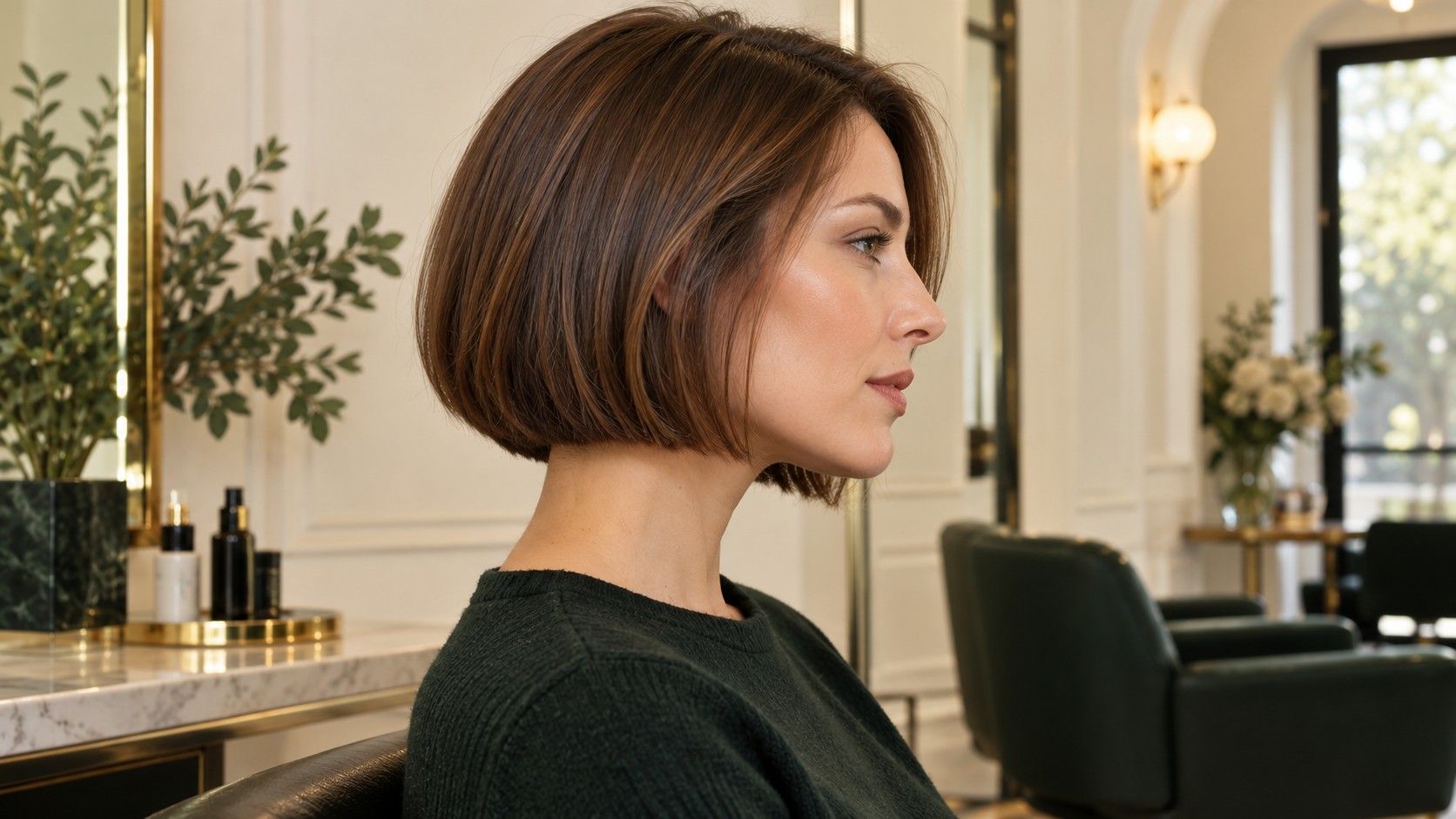
A blunt bob ending near the jaw creates two visible lines close together. That can produce a striking, structured look. There is no reason to rule it out simply because your face is square. The important detail is the exact resting point: a cut just above the jaw, level with it and several centimetres below it will frame the face differently. Have the stylist hold a section at each point before agreeing.
A lob gives more space between the jaw and the ends, especially when its front falls toward the collarbone. Ask whether the outline will be even or longer at the front. A pronounced angle may look sleek when straightened yet feel different when the hair waves up. Also check the amount of length left for a ponytail; a long front does not guarantee that the back will tie securely.
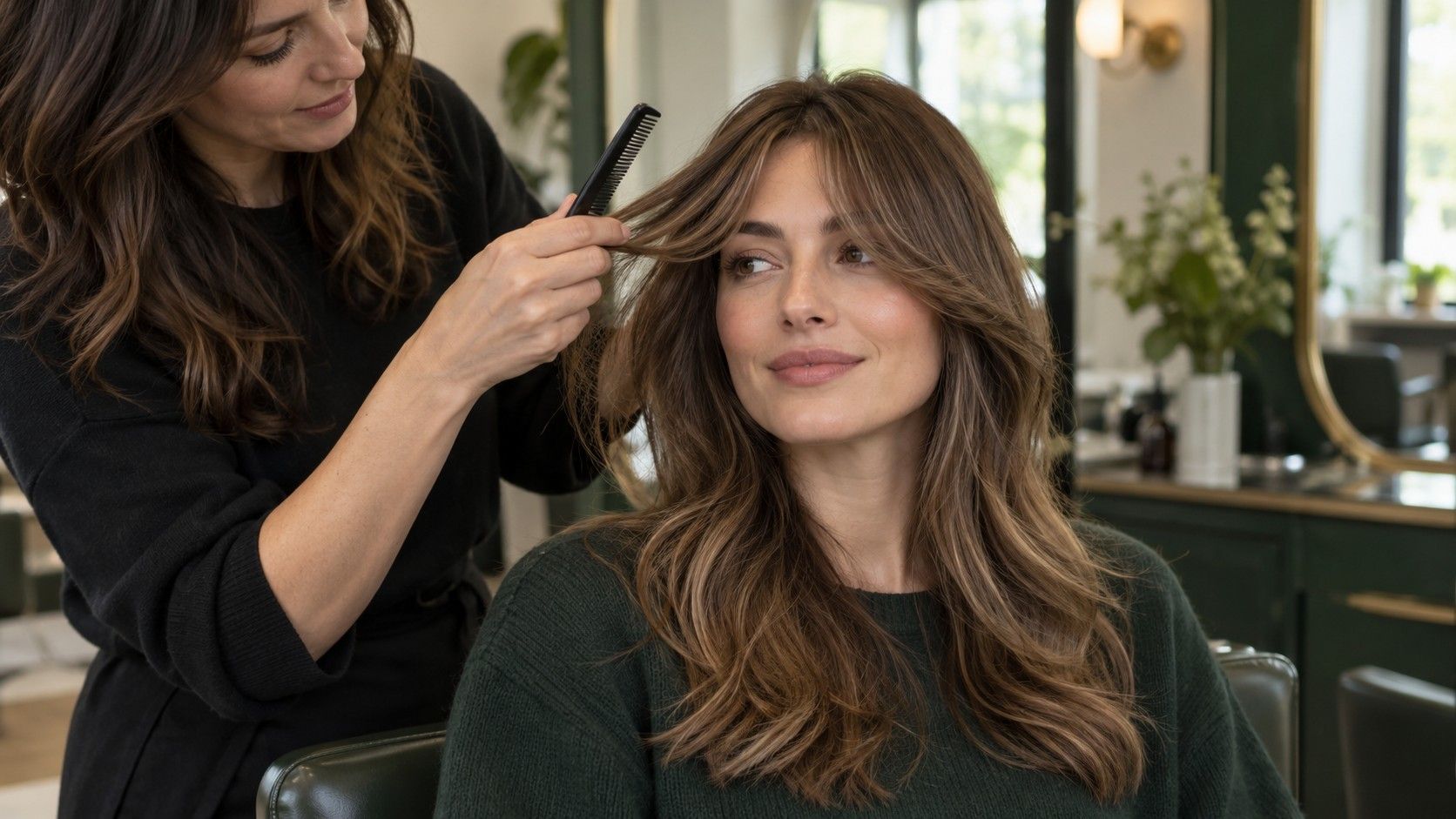
Long hair with selected layers can place movement below the chin while leaving the jaw visible. Avoid requesting “soft layers” without showing the height you mean. A first layer at the cheekbone creates a shorter frame than one beginning around the mouth or jaw. If your hair is fine, agree how much weight should remain at the bottom so the longer length still feels substantial.
Give fringe a job beyond following a face-shape rule
A side-swept fringe adds a diagonal direction across the forehead. It can be a useful option if you like one side more open or your hair naturally parts off-centre. Check which way the roots prefer to fall before committing. A fringe swept against a strong growth pattern may need dampening and drying each morning, even when the reference appears casually brushed aside.
Curtain fringe gives a central opening with longer pieces toward the sides. On a square face, those pieces can either sit close to the cheekbones or continue down toward the jaw. Decide whether you want to see the temples and whether the sides must tuck behind the ears. A photograph of a fully styled fringe can conceal how short its central section really is.
A full fringe creates another clear edge and can work well with an intentionally graphic haircut. The questions are practical: how dense should it be, where should it sit above the glasses, and what happens when it grows? If you prefer a softer edge, ask to see a less solid finish. Do not assume that thinning the fringe heavily will make a difficult hairline behave better; discuss the roots as well as the ends.
Match movement to the texture you actually wear
For straight hair, a crisp perimeter makes the construction easy to see. A small amount of bevel at the ends gives a different result from a completely flat finish. Ask for both to be shown if you are uncertain. With fine straight hair, removing too much weight can leave the outline less distinct than the reference, so talk about density before asking for extensive texture.
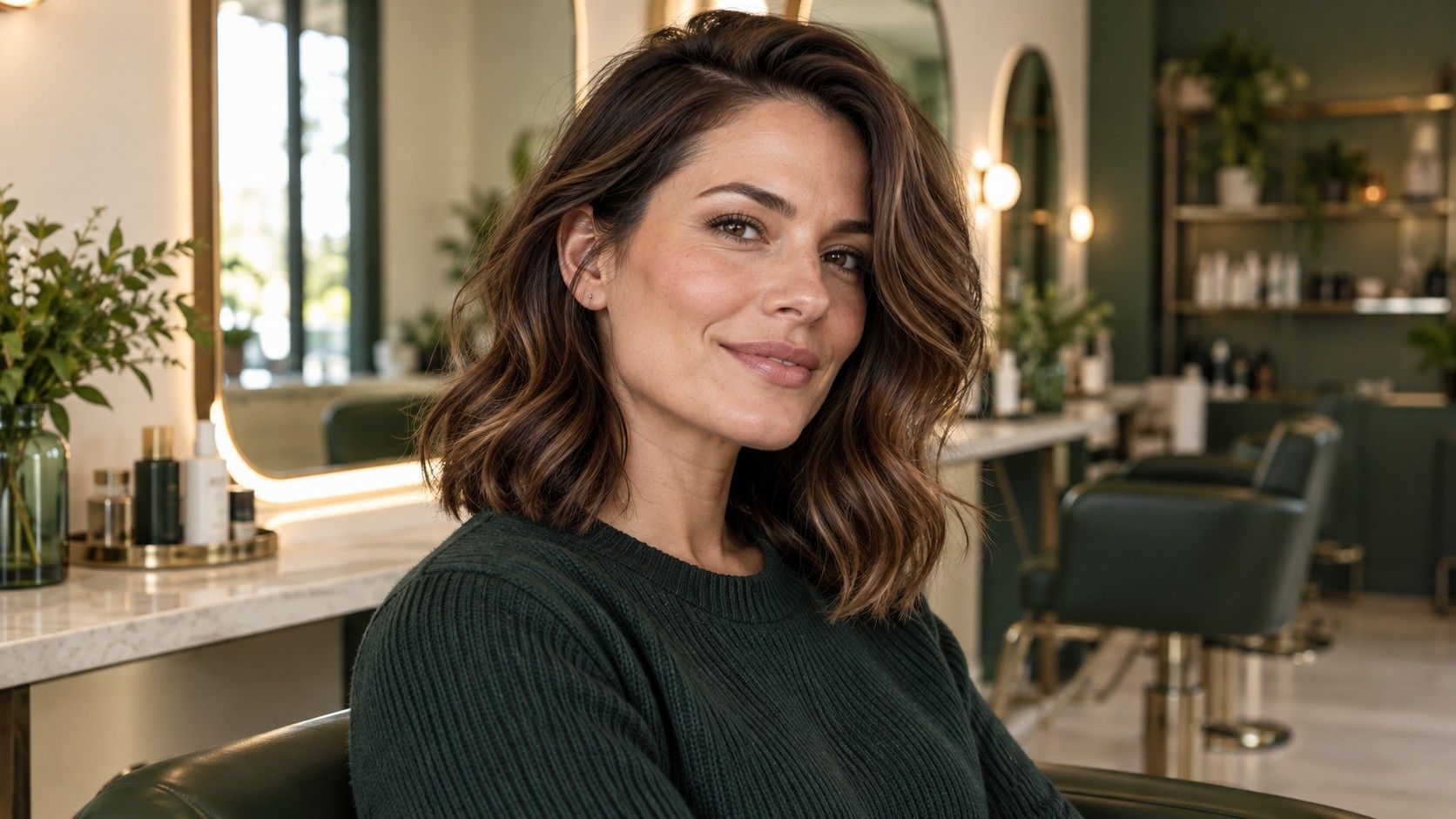
Waves can soften the edge of a bob or create width beside the jaw, depending on where they bend. Arrive with your usual natural texture if possible, or bring a recent photograph of it after an ordinary wash. The stylist needs to know whether the wave forms consistently or appears only in certain sections. A cut that depends on matching bends on both sides may require more styling than you want.
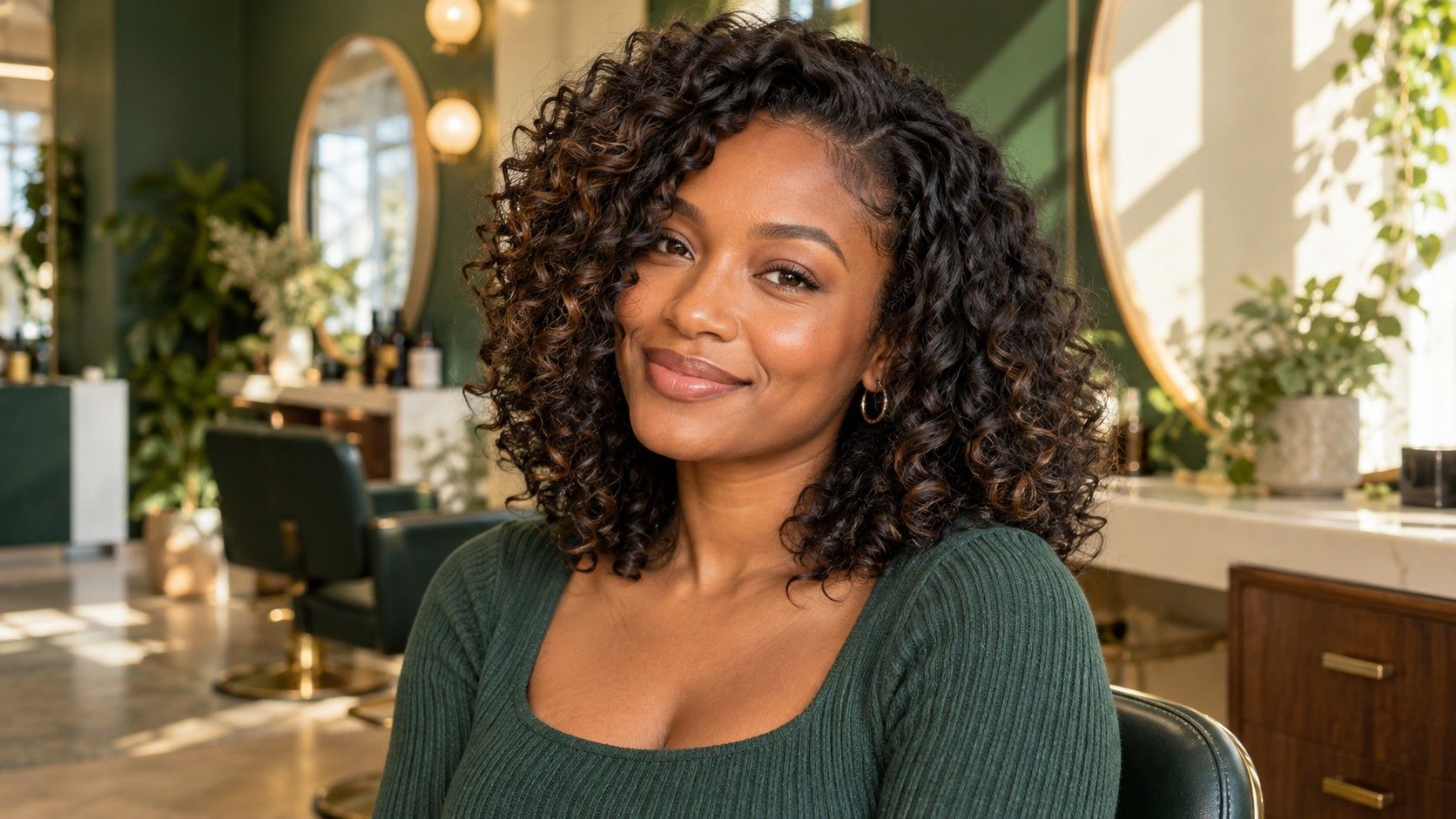
Curly and coily hair brings its own rounded or angular silhouette. Check the dry position of the face-framing curls, particularly around the jaw corners. Their resting point may change when shortened. Ask whether the shape will be assessed with your usual parting and products. You can choose generous side volume or a closer outline; the goal is the silhouette you enjoy, not a rule requiring curls to conceal the jaw.
Compare short cuts without losing the details
A pixie or short crop opens the face but still offers several framing choices. Longer side pieces can sit in front of the ears, while close sides expose more of the cheek and jaw. The top might lie forward, lift upward or fall diagonally. Bring a reference that shows these details clearly instead of assuming that all short cuts produce the same effect on a square face.
Consider the nape and ears as carefully as the fringe. A tightly cut nape grows into a different outline from a softer, longer one. Ask what happens between appointments and whether the shape will need frequent tidying. If you dislike hair touching the ears, mention it. That small preference can determine whether the short cut feels comfortable long after the first photograph.
For haircuts for square face shapes, “make it softer” is often too vague to guide the whole appointment. Say whether you mean a broken perimeter, loose waves, longer sideburns or fewer blunt lines. Those are different requests. You may want a sharp back and a mobile front, and that combination should be discussed explicitly rather than reduced to a single adjective.
Leave with a cut you can reproduce
Ask how the front will look on the days you skip heat styling. A salon finish can make a fringe curve neatly away from the jaw even when it naturally falls straight across it. Have the stylist explain the minimum routine and show the direction of the brush or dryer. If you own only a diffuser or normally air-dry, the demonstration should take that into account.
Before standing up, try the cut with glasses, tuck it back and turn your head. Check where the short pieces land when you look down. These movements are more revealing than a perfectly arranged front view. If a section keeps falling across the eye or catches on the glasses, discuss it while the stylist can still see the problem.
After your first home wash, take a simple picture of the dry result and note any troublesome area. Perhaps the ends sit well but the fringe feels heavy, or the jaw-length piece kicks out more than you expected. Bring that evidence to the next visit. A small change in length or weight may resolve the issue while preserving the parts of the haircut you already like.