Advice about hairstyles for oval faces often stops at “you can wear anything.” That leaves the actual haircut undecided. Length, hair density, fringe and the time you spend drying still matter. Start with the feature or texture you want to show, then choose the shape around it. An oval outline offers possibilities, but it does not tell you whether a blunt bob, a cropped cut or long layers will suit your everyday routine.
Use the face shape as a description, then move on
An oval face is commonly described as longer than it is wide, with a gently curved jaw and a forehead that is not dramatically different in width from the cheeks. You do not need exact ratios to use that description. Look in a mirror with the hair pulled back and the chin level. Notice whether the apparent length comes mostly from the forehead, the middle of the face or the chin.
Those differences matter when looking at reference photographs. Two people can both have an oval outline and prefer very different amounts of forehead showing. One may enjoy a high, swept-back crop; another may prefer a fringe and width near the cheeks. Neither preference needs to be justified by a rule about ideal proportions.
If you sit between oval and oblong, compare the effect of added crown height and added side volume in your own hair. A loose clip can hold the top back; tucking the sides changes the frame. These quick trials cannot reproduce a haircut, but they help you identify the part of an image you like before you ask someone to cut it.
Pick a length for its outline and its practical limits
A short crop brings more attention to the hairline, ears and the outline of the head. Compare a close side with a longer, softer side before choosing the reference. The fringe can be brushed forward, lifted or swept sideways, giving quite different impressions even at the same overall length. Ask how the cut grows out around the ears and nape, where a short style often feels untidy first.
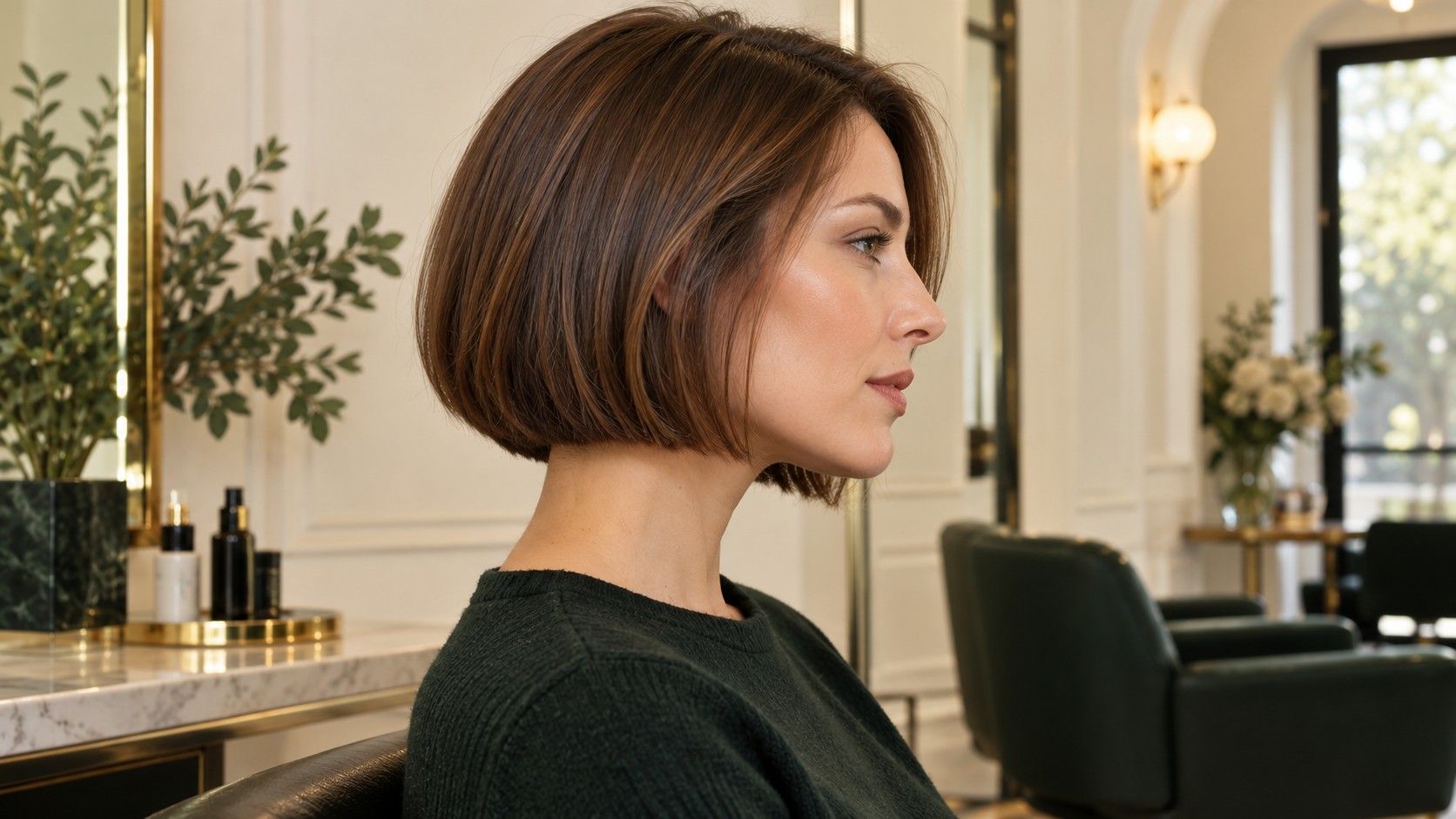
With a bob, the position of the perimeter is the big decision. A jaw-length line looks precise and compact, while a longer bob leaves more hair below the chin. The angle from back to front matters too: a steeply angled bob is a different commitment from an even perimeter. Ask for a side view rather than relying on a flattering front photograph.
A shoulder-length cut is flexible, but the shoulders influence the finish. Ends may turn out where they touch clothing. Long hair avoids that particular contact point and gives more room for layers, though it also takes longer to wash and dry. Choose the length with your usual tie-back, exercise routine and drying time in mind, not just the proportion of the face in a still image.
Decide how much forehead you want to show
A full fringe introduces a definite edge across the forehead. Its width and density can change the whole haircut, even when the rest stays long. Show the stylist where you would like the fringe to begin at the temples, and ask how much hair will be taken forward. A broad, heavy section and a light central section do not behave like the same fringe.
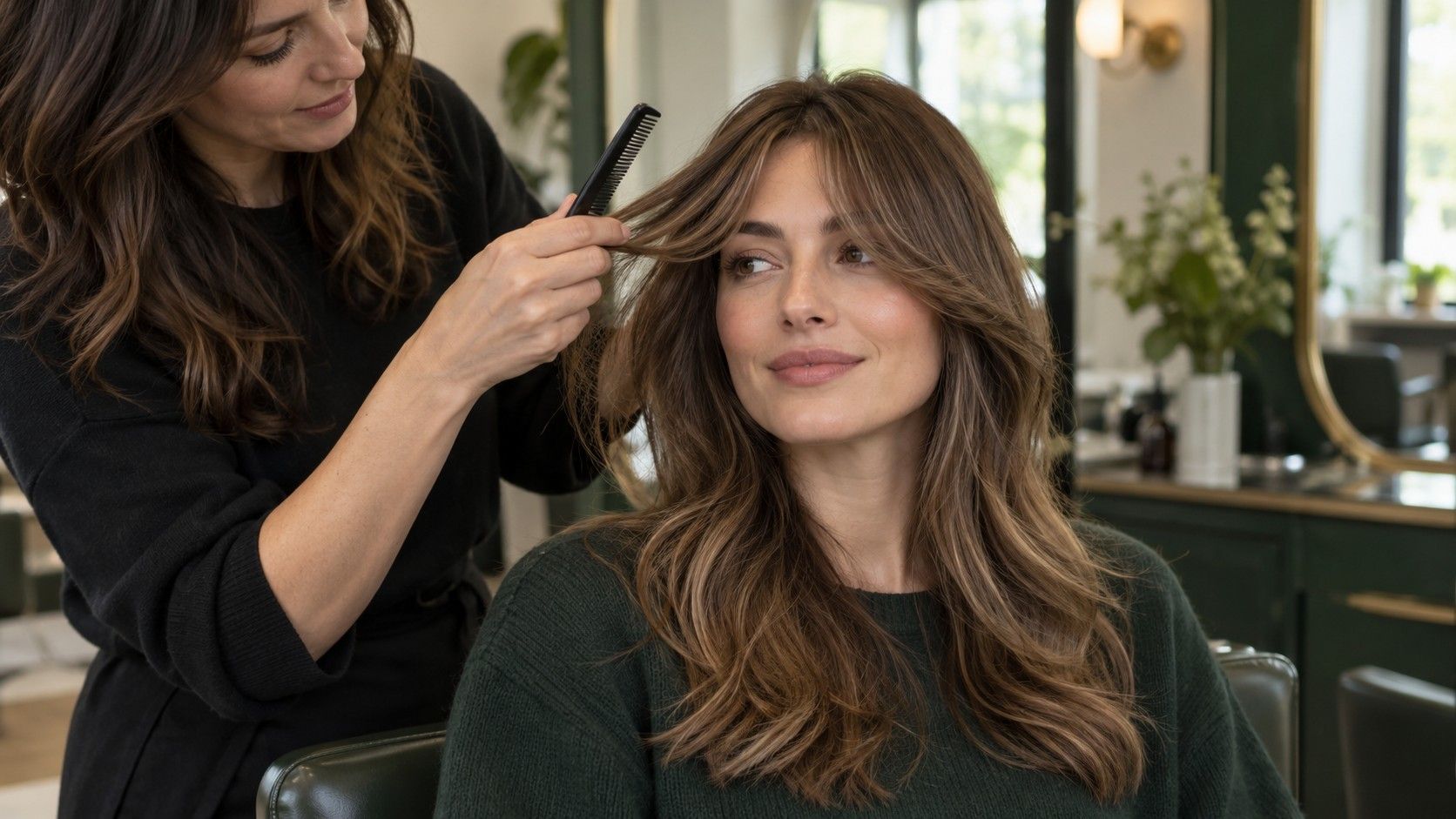
Curtain fringe keeps an opening in the middle and can connect into cheekbone- or jaw-length layers. Look closely at where the shortest pieces end in your reference. Short pieces may fall into the eyes when unstyled; longer ones may need a brush to curve away. If the ability to tuck everything behind your ears matters, demonstrate that requirement during the consultation.
You can also keep the forehead open. Try a centre part, a slightly offset part and a brushed-back front on an ordinary morning. A cowlick may produce a useful lift or an awkward split, depending on the direction. Before cutting a fringe to solve a styling frustration, ask whether root direction, weight or a different parting could make the existing length easier to handle.
Choose layers according to density and movement
Layers change where the hair carries weight. On dense hair, selected internal weight removal may help the cut move without filling the surface with short pieces. Ask what the stylist intends to remove and what the outer outline will look like. “Less bulky” can mean several different things, and aggressive thinning is not the only route to a lighter-feeling result.
Fine hair often benefits from keeping enough weight in the perimeter. Face-framing pieces can provide movement around an oval face while the back remains relatively full. Before requesting the many tiers visible in a thick-haired reference, discuss how much of your own lower length would remain. A modest change at the front may give you the effect you wanted without losing the ends you like.
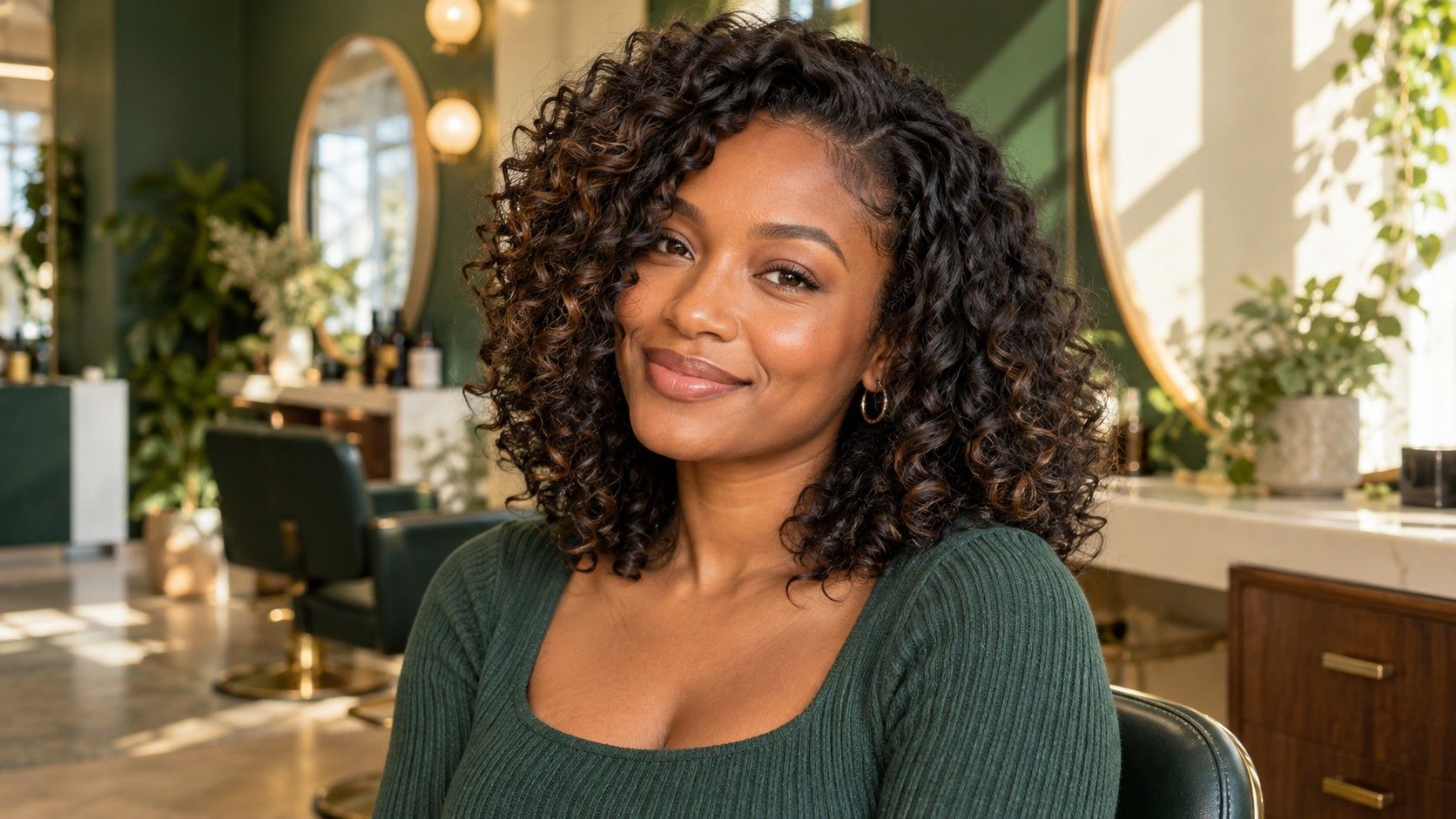
Wavy hair should be assessed with its usual bend. A layer that sits near the jaw when stretched can spring toward the cheek when dry. Curly and coily hair needs the same attention to the final silhouette, with room for different shrinkage across the head. Ask how the front will be checked dry and whether your normal styling method is compatible with the proposed shape.
Read the styling in a photograph before copying the cut
A sleek centre-parted bob and a tousled bob may be almost the same cut with different preparation. Look for root lift, curved ends and tucked sections in a reference. If the face looks more open because the model has tucked one side away, you may be able to try that effect today. Separate the hair that has been cut from the hair that has simply been arranged.
The apparent texture deserves attention as well. Loose waves made with a heated tool can create an outline that your air-dried hair does not naturally hold. Ask what steps would be needed to reproduce the photo, and how the cut would look if you skipped them. This is a useful question even for haircuts for oval face shapes that are often described as easy or versatile.
Bring a photo you dislike alongside the ones you like. It can reveal a preference that vague words miss: perhaps you dislike a very rounded bob, a sharply exposed nape or layers that turn away from the face. Explain the detail without criticising the person wearing it. The conversation stays practical, and the stylist gets a clearer boundary to work within.
Agree on a routine before the scissors come out
Tell the stylist how often you wash your hair, whether you air-dry and how many minutes you can spend on the front. Also mention glasses, headwear and whether you need a secure ponytail. A haircut can fit an oval outline beautifully and still frustrate you if the shortest layer slips loose every time you work or exercise.
Before leaving, watch how the fringe or front section is dried and ask to try the movement yourself. A demonstration done entirely with professional tools can conceal the difficult part. Ask which single step matters most, whether that is directing the roots while damp or letting a curl set without touching it. Keep the routine small enough that you will actually repeat it.
Expect the home finish to be your real test. After the first wash, photograph the cut dry from the front and side, using roughly the same distance each time. Note what you like and what takes effort. On the next visit you can discuss a specific extra centimetre of fringe, a heavier edge or a little less volume at the crown, instead of starting the search for a whole new style again.