Choosing hairstyles for oblong faces does not have to mean hiding length. You may enjoy an open forehead and a narrow silhouette, or prefer a fringe and more movement at the sides. The helpful decision is where the hair carries its volume and where the ends rest. Look at those details alongside your natural texture, then choose a cut that still feels good when you style it yourself.
Work out which part of the outline matters to you
An oblong face is usually described as noticeably longer than it is wide, with a fairly consistent width through the forehead, cheeks and jaw. The outline can be softly curved or more angular. You might also see it called a long face. These labels overlap, so there is little benefit in settling the terminology before you have identified what you want the haircut to do.
With the hair pulled back, notice whether the length you see comes mainly from the forehead, the middle of the face or the lower face. Then release the hair and compare the frame. A fringe changes how much forehead is visible; volume beside the cheeks changes the overall silhouette. Those are separate choices, and you can like one effect without wanting the other.
Use a mirror at eye level or a photograph taken from a comfortable distance. A close camera, raised chin or overhead angle can alter your impression. Try a loose tuck at each side and a low tie-back before collecting references. If you like the clean, exposed outline, keep that preference. There is no need to make every hairstyle produce the shortest-looking face possible.
Choose the length with side volume in mind
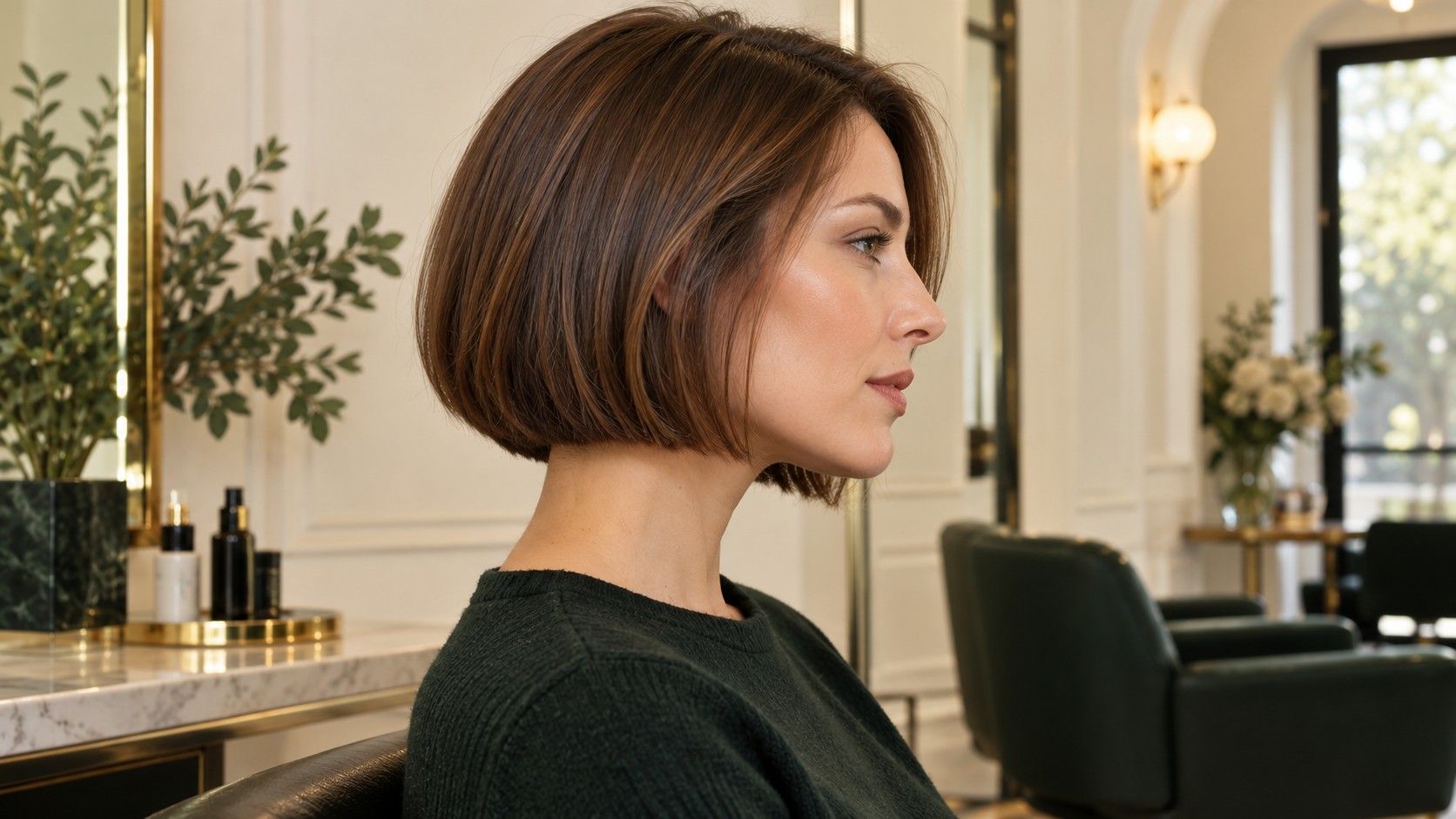
A chin-length bob can create a compact outline and bring the ends close to the jaw. Its width depends on the cut and styling: a sleek bob tucked behind the ears looks quite different from a rounded version with a gentle bend. Ask to compare the proposed length with one just below the jaw. A few centimetres can change where the weight sits and whether the ends turn outward.
A shoulder-length cut gives more room for waves and layers around the cheeks. It also meets the shoulders, which can push the ends into a flick. Decide whether you like that movement or expect a straight edge every day. If you need to tie the hair back, check the shortest front and back sections rather than relying on the word “shoulder-length.”
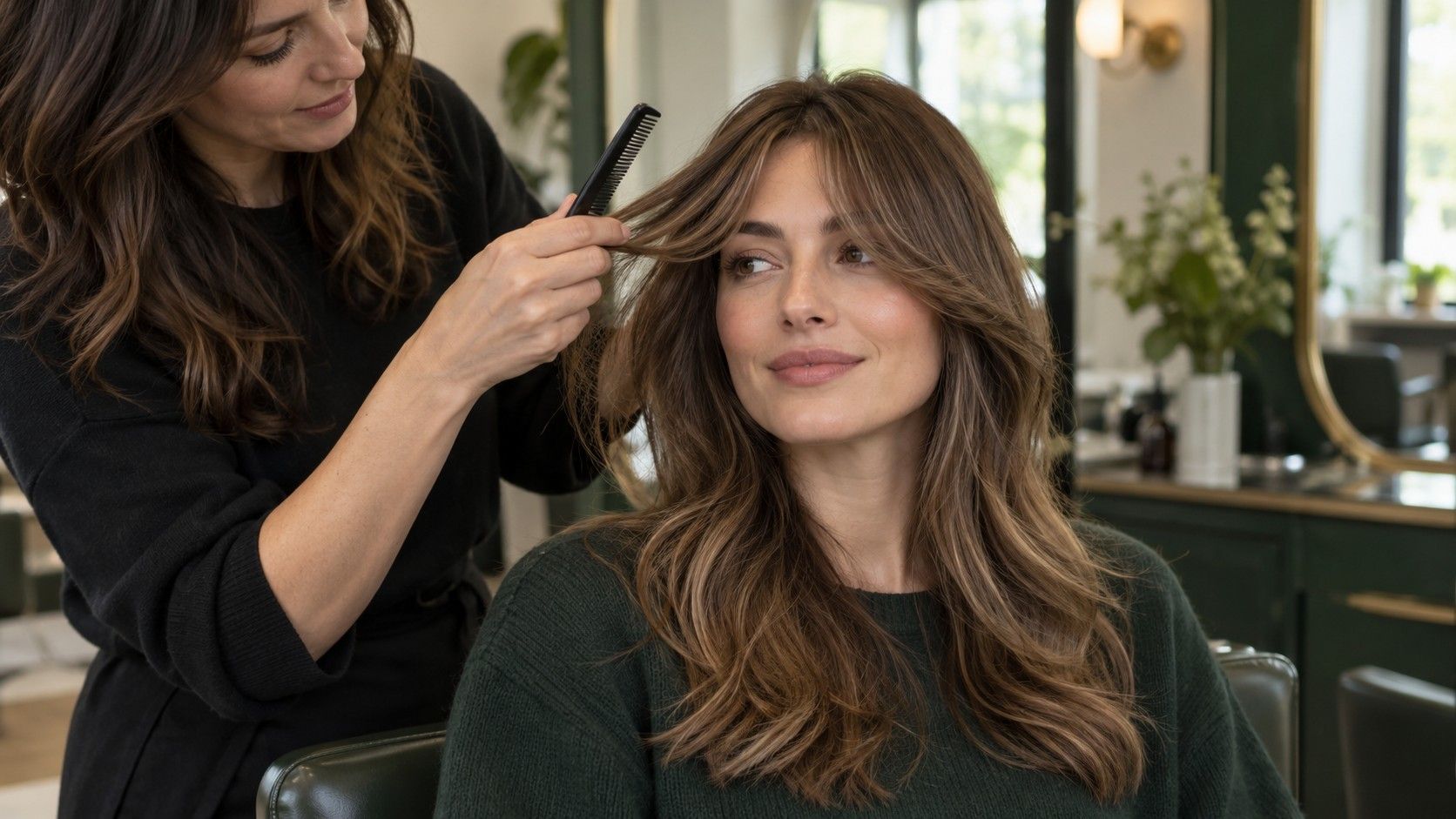
Long hair is still an option for an oblong face. You may prefer its uninterrupted lines, or choose face-framing pieces and waves for more activity at the sides. The detail to discuss is where the first layer begins. Very short top layers can add lift high on the head, while longer layers retain weight lower down. Ask the stylist to explain which silhouette the proposed layering is intended to create.
Treat fringe as a practical commitment
A full fringe covers part of the forehead and introduces a clear horizontal edge. That may be the look you want, but its success at home also depends on hairline, density and root direction. Ask how wide a section will be used and how much thickness will remain at the sides. A dense, rounded fringe in a photograph may be difficult to reproduce with much finer hair.
Curtain fringe leaves an opening at the centre and can place movement near the cheekbones. Its effect depends on that opening: a wide, long split exposes more forehead than a shorter, narrower version. Look for references where you can see the roots and ends clearly. If the fringe is swept far back with a brush, ask how it will fall when left to dry more naturally.
A side fringe offers another direction across the forehead and may work with an existing part. Test your root pattern before choosing which side to sweep toward. Glasses need checking too, since the fringe may catch on the frame or separate above a lens. Ask for the shortest useful length and the maintenance it will need, rather than selecting a fringe solely for its apparent effect on face length.
Put movement where your texture can hold it
For fine, straight hair, keeping a substantial perimeter may make a bob feel fuller. Large numbers of short layers can remove the weight that gives the lower edge its shape. If you want more width at the sides, discuss a manageable bend or a different length as well as layering. A cut cannot guarantee all-day volume that your texture naturally releases.
Wavy hair may already create the side movement you like. Observe where the wave first bends after an ordinary wash: near the cheek, jaw or shoulder. That starting point helps the stylist decide where layers should connect. A polished reference with identical waves on both sides may have been styled section by section, so ask what the result would look like with your usual air-dry routine.
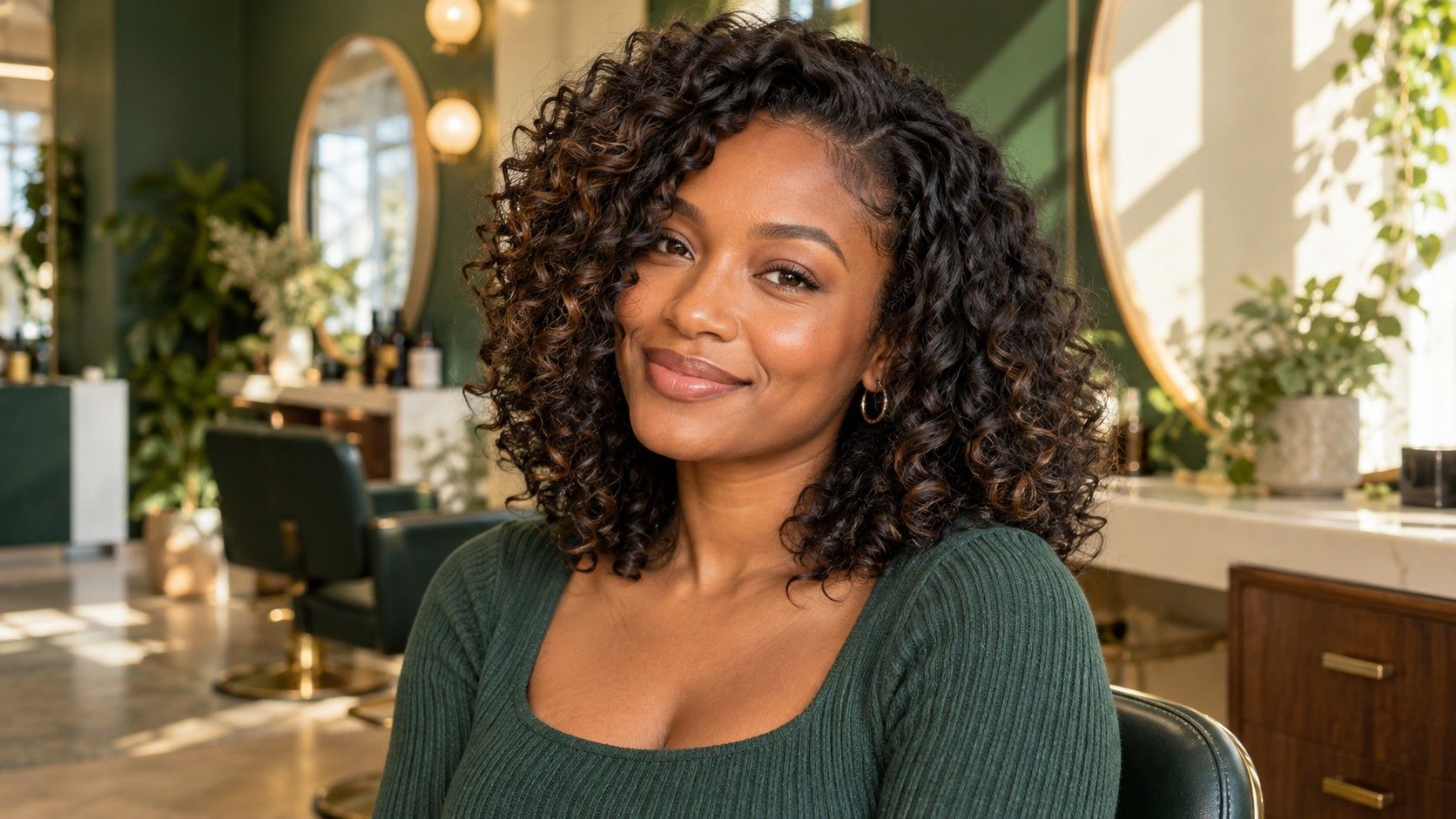
With curls and coils, assess the dry silhouette and the amount of shrinkage at the front. A shorter top can create more crown height; shorter sides can make the outline feel closer. If your preference is width around the cheeks, show that clearly and ask how the cut will retain it. The objective is your chosen arrangement of volume, without treating natural height as something that always needs removing.
Read short cuts and updos beyond the front view
A short crop can work with an oblong outline in several ways. A fringe worn forward gives a different frame from a high, swept-back top. Longer sides create another silhouette again. Ask to see the profile and nape of a reference, because a dramatic top may conceal very close sides. Decide whether you want that contrast and whether you like how it will grow out.
If you often wear an updo, test where you place it. A high knot adds a visible shape above the head; a low bun keeps most of the arrangement lower down. Either can be enjoyable. Loose front pieces, a fringe and an open hairline each change the frame independently. Use a mirror to choose the version you prefer instead of assuming one placement is correct for every long face.
Check the haircut with your usual accessories. A headband can push the front flat or lift it; glasses can redirect short layers; headphones can compress side volume. These are ordinary parts of wearing the cut. Mention them during the consultation so that the shape being discussed is the one you will actually see between appointments, not just the version arranged for a photograph.
Ask for a home routine you are willing to repeat
Bring two or three references with separate purposes: one for the length, one for the fringe and one for texture. Explain the exact feature you like in each. Include a recent picture of your own hair after a normal wash. When comparing haircuts for oblong face shapes, that unstyled photograph can be more useful than another perfectly finished salon image.
Give the stylist a realistic time limit for mornings. A fringe may need attention even when the rest can air-dry. Ask to see the minimum method with a tool similar to yours, including how to direct the roots while damp. If the desired side volume requires a full blow-dry, decide whether that is a routine you want before agreeing to a cut built around it.
After your first home wash, photograph the dry result and note where it differs from what you expected. Perhaps you like the length but want less lift at the crown, or the fringe opens too widely. Those are specific adjustments to discuss at the next visit. Keeping the observations small and concrete makes it easier to refine a promising haircut without repeatedly starting over.