Hairstyles for heart-shaped faces are often presented as a balancing exercise: less hair here, more hair there. That can be useful as a visual choice, but it is not an obligation. A broad forehead and narrower chin can look striking with the face fully exposed. Choose whether you want an open hairline, a fringe or more movement near the jaw, then test those details against your texture and morning routine.
Look at the hairline and chin as separate details
A heart-shaped face is generally described as broader through the forehead or upper face and narrower toward the chin. Some people also have a widow’s peak, but that hairline feature is not required. Pull the hair back and look at the whole outline. Notice where you see width and where the jaw begins to narrow, without trying to force every feature into a diagram.
A widow’s peak can affect a fringe because the roots may separate or lift at the centre. A high forehead, fine temples or a strong cowlick creates a different practical question. Tell the stylist which part you want visible and which part you prefer framed. “I like my hairline but want movement beside my chin” gives clearer direction than a request to make the face look less heart-shaped.
Look at photographs with the chin level and the hair arranged in a few ordinary ways. Try the sides tucked, a loose centre part and a low ponytail with the front out. These tests help you distinguish an actual preference from a rule you have read. If you like your forehead open in every version, a heavy fringe is unlikely to become appealing simply because a chart recommends it.
Use the bob length to choose where fullness sits
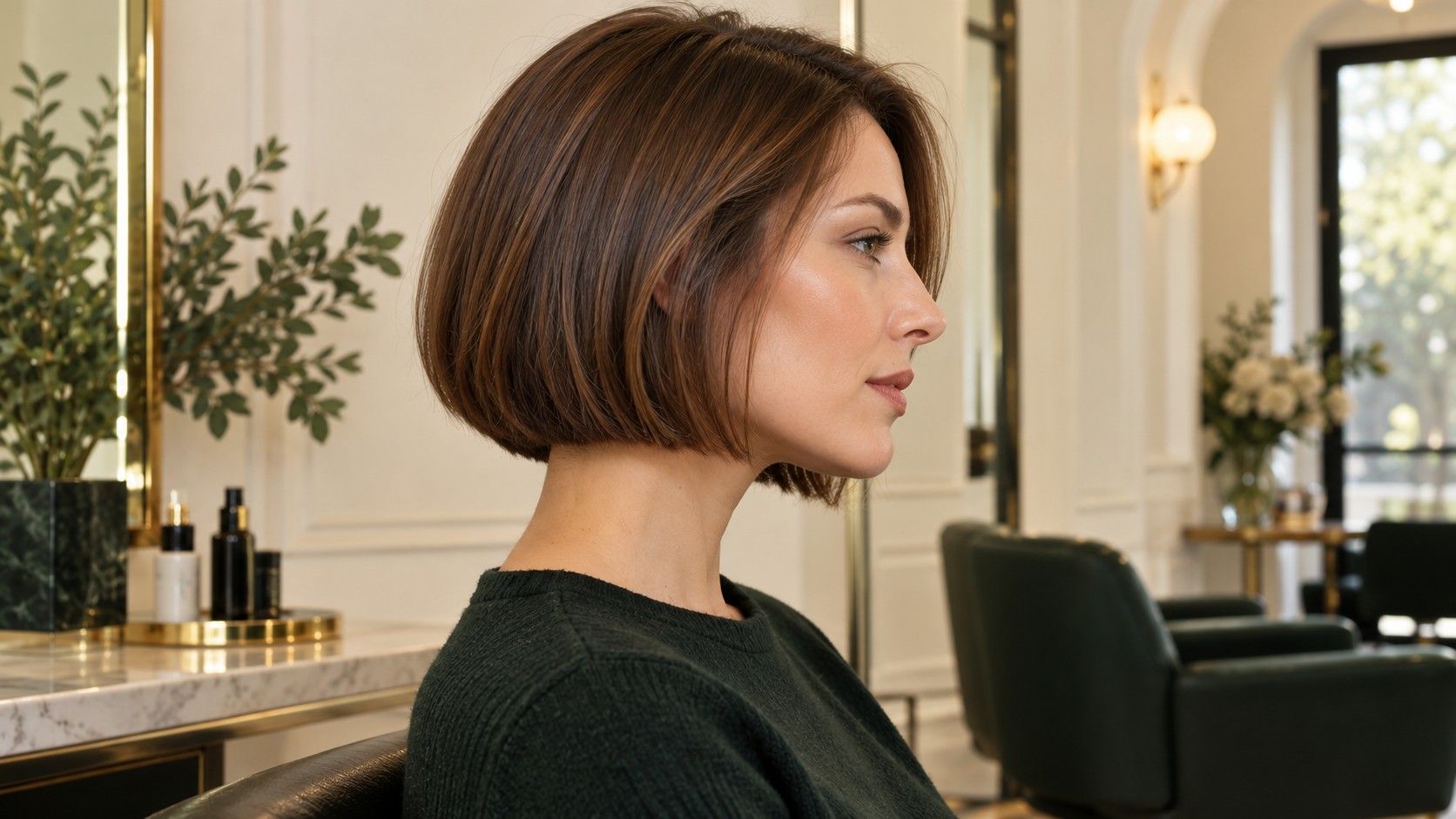
A chin-length bob places the perimeter near the narrowest part of many heart-shaped faces. If styled with a curved or slightly outward edge, it can create a fuller lower outline. That is an option rather than a requirement. Ask the stylist to show the proposed resting point with a section of hair, and compare it with a version just below the jaw.
A bob with a strong, even edge feels different from a layered bob with light, moving ends. Fine hair may need more perimeter weight to keep that lower shape visible. Dense hair may produce more volume than the reference suggests, especially if it bends or curls. Ask how the cut will sit after air-drying rather than choosing the length from a smooth salon photograph alone.
A collarbone lob offers more room for movement and may retain enough length for tying back. Check the shortest layer as well as the overall length. Front pieces cut near the cheek can stay loose in a ponytail even when the back ties easily. Also consider contact with your shoulders: an outward flick can be pleasant, but it needs to be part of the expected finish.
Choose a fringe around the way the roots grow
A side fringe can provide a diagonal sweep while leaving part of the forehead visible. Its direction should work with the natural root pattern where possible. Ask to see it dried before deciding that it needs to be shorter. A piece that looks too long when wet may spring up or sweep away once dry, particularly near a widow’s peak or a strong front cowlick.
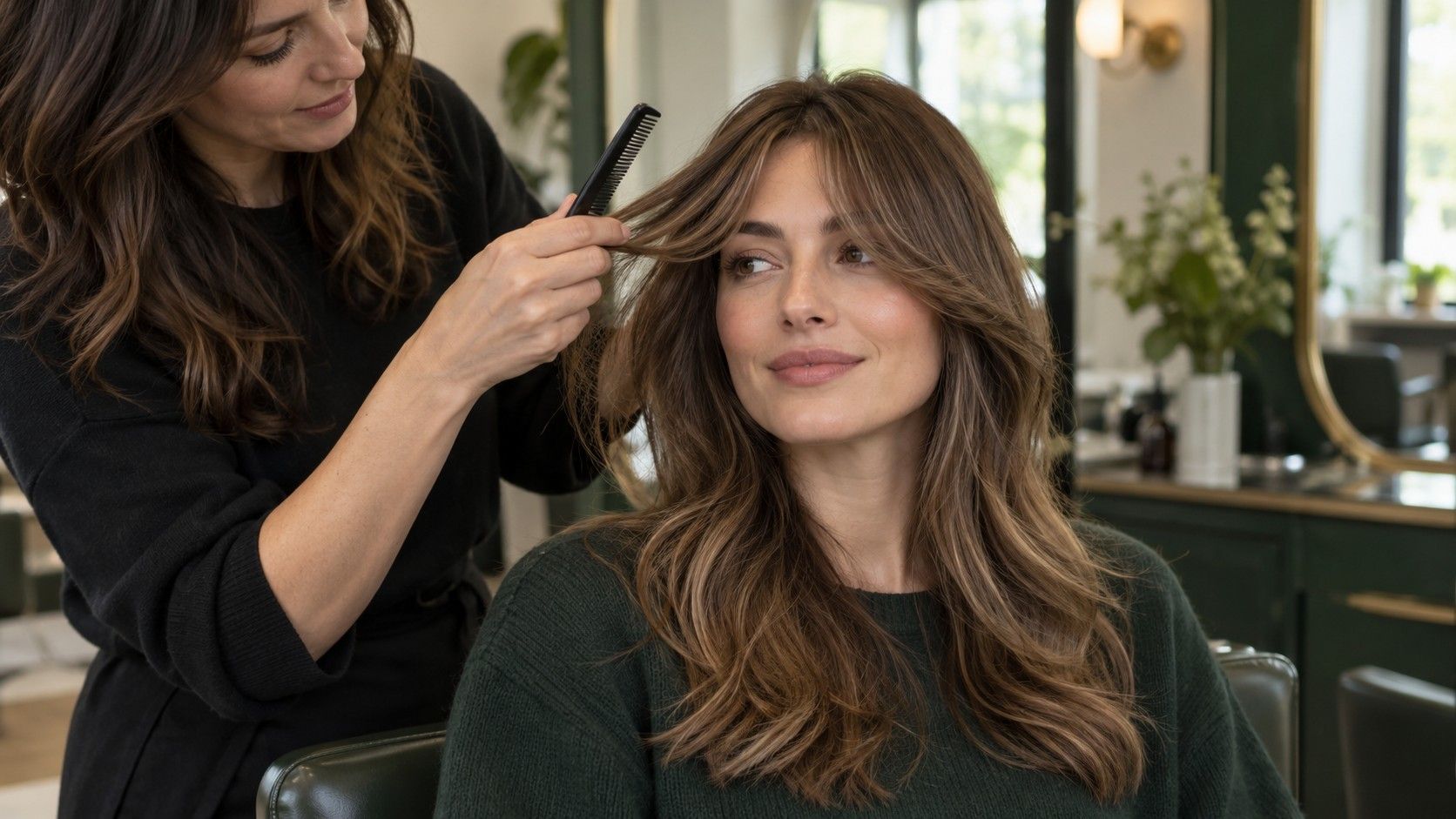
Curtain fringe allows a central opening, with longer sections moving toward the cheekbones. The width of that opening and the length of the sides make a substantial difference. Bring a reference where the fringe is visible rather than hidden by a hand or heavy styling. If you need to tuck it behind your ears, say so before the shortest points are cut.
A full fringe can be a bold and enjoyable choice, but it needs enough suitable hair to form the edge you want. Ask how wide a section will be brought forward and what it will remove from the sides. Fine hair can look quite different from a dense reference once that section is separated. Glasses also matter: check the intended fringe length with your usual frames on.
Keep long layers connected to the shape you want
Long hair can carry movement near the jaw while leaving the upper face open. Face-framing layers beginning below the cheekbone offer a different frame from pieces starting at eye level. Show the stylist where you would like the first visible bend to sit. That is more precise than requesting layers throughout and hoping the front falls into place.
If you enjoy a narrower, sleek outline, keeping the sides smooth and the ends relatively straight may suit your taste. If you want more fullness around the lower face, waves or a curved blow-dry can introduce it. Remember that the styling creates some of that volume. Ask what the haircut itself contributes and what would need to be repeated at home.
On fine hair, preserve enough weight at the bottom to support the length. On dense hair, discuss where bulk feels uncomfortable rather than asking for all-over thinning. The back may feel heavy while the front already lies lightly. Treating those areas separately can keep the face frame intact and avoid creating short pieces where you did not want them.
Read curls and short cuts by their dry silhouette
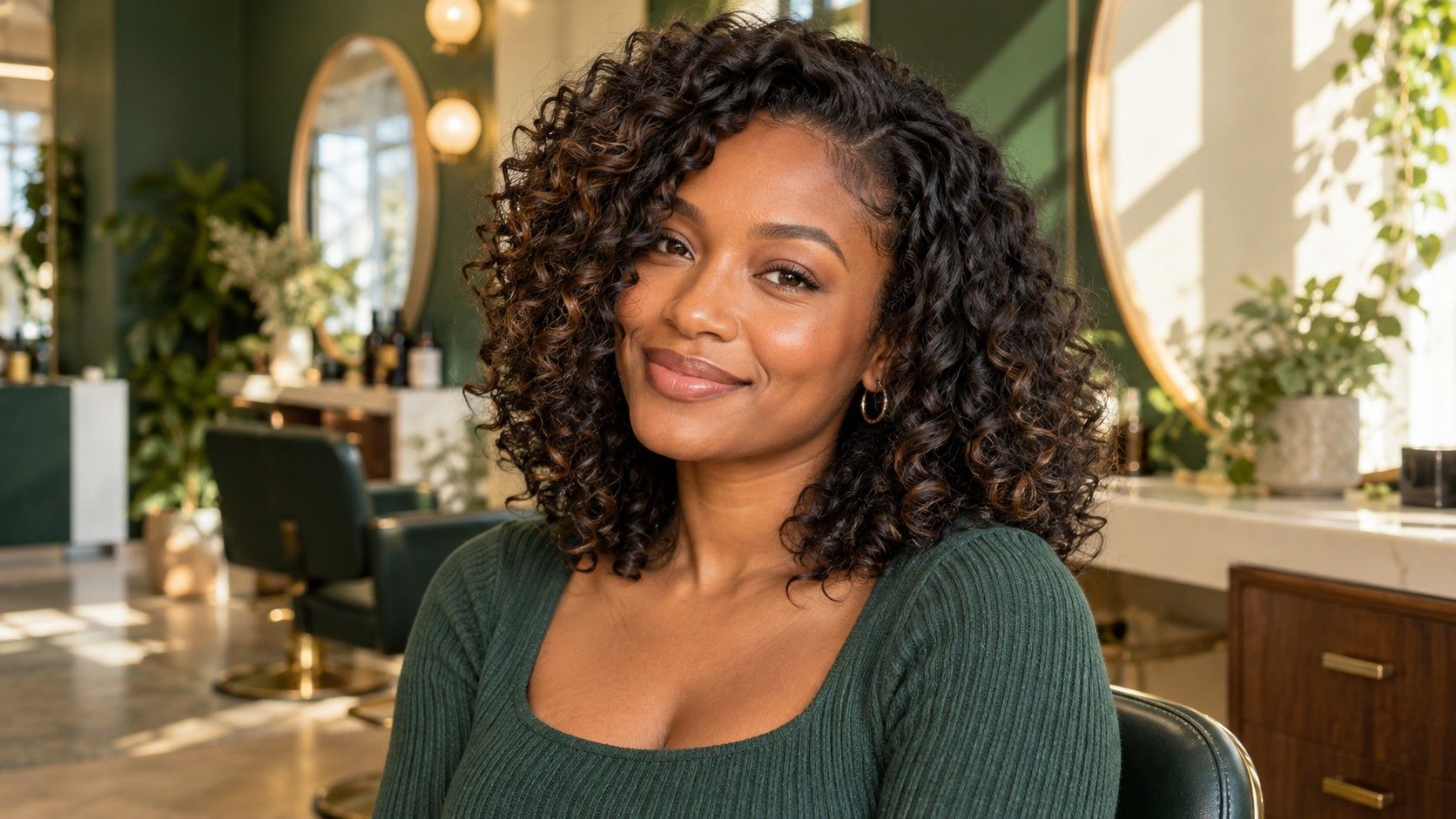
With curls, the widest point of the hair may sit above, beside or below the cheekbones. Look at that silhouette before deciding on the amount of layering. Shortening a front curl can raise it away from the jaw, which may change the lower volume you hoped to keep. Ask the stylist how the face frame will be checked dry and with the parting you normally wear.
A short crop can leave the forehead and chin clearly visible. Longer fringe, soft pieces in front of the ears or a textured top can change its character without hiding the face. Compare photographs that show the sides and nape. A close undercut and a softly grown-out side are different commitments even when the top looks similar from the front.
Ask how a short cut behaves after several weeks of growth. If the front is the feature you like most, find out whether it can keep its length while the nape and ears are tidied. Haircuts for heart-shaped face outlines should still accommodate the practical details of your life: headphones, glasses, hats and the amount of hair you want touching your neck.
Bring a clear request to the appointment
Choose two or three references and identify one detail in each: the chin-length edge, the open forehead or the loose front curl. Try to include someone with a similar texture, while remembering that photographs may involve extensive styling. A picture of your own hair on an ordinary day gives the stylist a useful counterpoint to the polished references.
Explain your morning routine in concrete terms. Say whether you dry the fringe separately, tie the hair up while damp or leave it loose to air-dry. Ask for a demonstration using the sort of tool you own. If a proposed shape depends on a round brush and you never use one, that fact should influence the discussion before the cut begins.
Finally, check the hair in motion. Tuck it behind the ears, put on your glasses and look down as if reading. Once you have washed it at home, note where it settles without constant adjusting. The next appointment can refine that evidence: a little more length at the temples, a lighter front edge or a less rounded bob. Small, specific decisions are easier to evaluate than a promise of perfect balance.